
 Way4wordMom
 Topher Scott
In his original contribution to Way4word, John-Manuel Andriote grounds our election reaction in an all-too-familiar experience: grief. John is a singular and important contributor to our understanding of human response to tragedy, given his witness to the struggles of gay- and HIV-positive Americans, seeking to survive in politically treacherous times. He is a friend with whom I shared my start in HIV work and advocacy in the late 1980’s, when we were co-workers at the National AIDS Network in Washington, DC.
I so appreciate John’s heart-felt contribution to these pages.
By John-Manuel Andriote
NORWICH, CT
I felt something that went beyond disappointment after Election Day. I recognized it, but it took a minute to pinpoint what exactly was going on. I did a sort of mental checklist of my feelings.
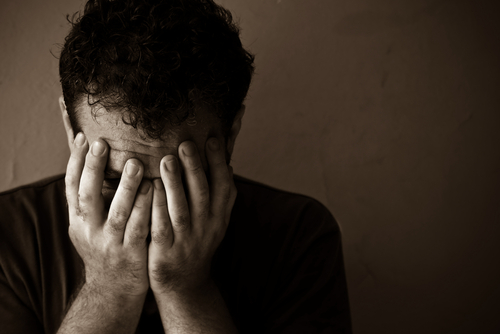
Then it hit me. It was grief.
I was feeling the kind of grief that has been far too familiar to me. I learned a lot about grief in all the years of losing friends to AIDS, starting in my twenties, and my father and other dear friends to cancer. I had written about it over the years, too.
In fact my first major feature article on HIV-AIDS, in 1986, was called “The Survivors,” and focused on the bereavement of gay men whose partners had died from AIDS. The first chapter I wrote when I was writing my book Victory Deferred is called “In Memoriam,” and focuses on how the gay community expressed our grief as individuals and as a community.
We don’t grieve only when someone we care about dies. We grieve when a relationship ends, or we lose a job we liked, or we don’t get into the college we set our heart on.
There’s another source of grief, too, and it’s what I’ve been feeling. It’s what happens when you are forced to confront a truth about someone or something that turns the image you had of it upside down.
When gay kids come out to their parents, for example, it’s common for the parents to go through a grieving process. The kid they thought they knew turns out to be someone different, and they have to readjust their understanding and expectations accordingly. Getting to the point of acceptance, the final stage (and goal) of grieving, can mean for some parents going through the full grieving process—from denial to bargaining, anger, depression, and finally acceptance.
It was this kind of grief I felt after the election. It was the grief that follows disillusionment—in this case about my fellow Americans.
I understand the anger and frustration of the white working people who supported Donald Trump. In my blue state of Connecticut, Trump won big here in the post-industrial eastern half of the state. I’ve seen with my own eyes the decline of my old hometown from a once-thriving mill town to a hollowed-out catch basin for low-skill, low-income families—generations of them and overwhelmingly white.
Their willingness to throw everyone else under the bus—African-Americans, Latinos, LGBT, the disabled, women, even a Gold Star family who happened to be Muslim—is what stunned and dismayed me most.
I was shocked that so many men and women could vote for a man to be president of my country after he had so publicly and disgustingly mocked everything I believe and value about common decency, the strength that comes from diversity, and the respect all humans owe one another.
I had wanted to believe my country was on an upward trajectory, moving further along toward becoming worthy of its status in the world as the land of aspiration and dreams. I wanted to believe America is a country where any person, of whatever color or creed, is welcome to help create a society in which “E Pluribus Unum,” “From Many, One,” is believed to be our strongest virtue.
My life’s work as a journalist has been driven by these values. My 30-year commitment (and counting) to documenting and reporting on the impact of HIV/AIDS has been my way of “doing my part” to help create the just and compassionate nation, and world, I want to live in.
The election was a rude awakening to the degree of fear and resentment that rules so many of my countrymen’s minds. It frightened me to think that I, or anyone else “different” from the white heterosexuals who supported Trump, could become the next target of their rage, resentment, or violence.
It stuns me to think the president-elect of my own country was the one whose words and behavior were perceived as giving permission for reprehensible behavior.
All this felt traumatic to me, and that felt all too familiar. But what is also familiar to me from my vast experience with grief is this: I have learned that I am a strong and resilient man. I have survived multiple traumas in my life, and still love life and feel hopeful about my future.
I’ll apply what I’ve learned about bereavement to work through this latest trauma. I am confident I will survive this one, too.
 John-Manuel Andriote (jmandriote.com) has reported on HIV/AIDS and other health and medical subjects for more than 30 years. His articles have appeared in magazines, newspapers, and websites from The Atlantic to the Washington Post. Kirkus Reviews hailed Andriote’s 1999 book Victory Deferred: How AIDS Changed Gay Life in America (victorydeferred.com) as “the most important AIDS chronicle since Randy Shilts’ And the Band Played On.” Andriote is currently writing Stonewall Strong, the first nationwide examination by a journalist of gay men’s resilience, to be published by Rowman & Littlefield Publishers in fall 2017. He is also the author of the children’s book Wilhelmina Goes Wandering (runawaycowbook.com), based on the true story of a runaway cow and described as “extraordinary” by the president of the New England Association of School Libraries.
Categories: Featured Path, Way4word Original
 Way4word
Thanks for this. I think your exactly right. And I agree we will survive. I am committed to being a force to oppose this ” new normal”. I promise to protect and defend all that have been voted against
The believers in love must stick together as we have a very big job ahead of us
LikeLike